by Helen Kenworthy | Sep 4, 2025 | Education
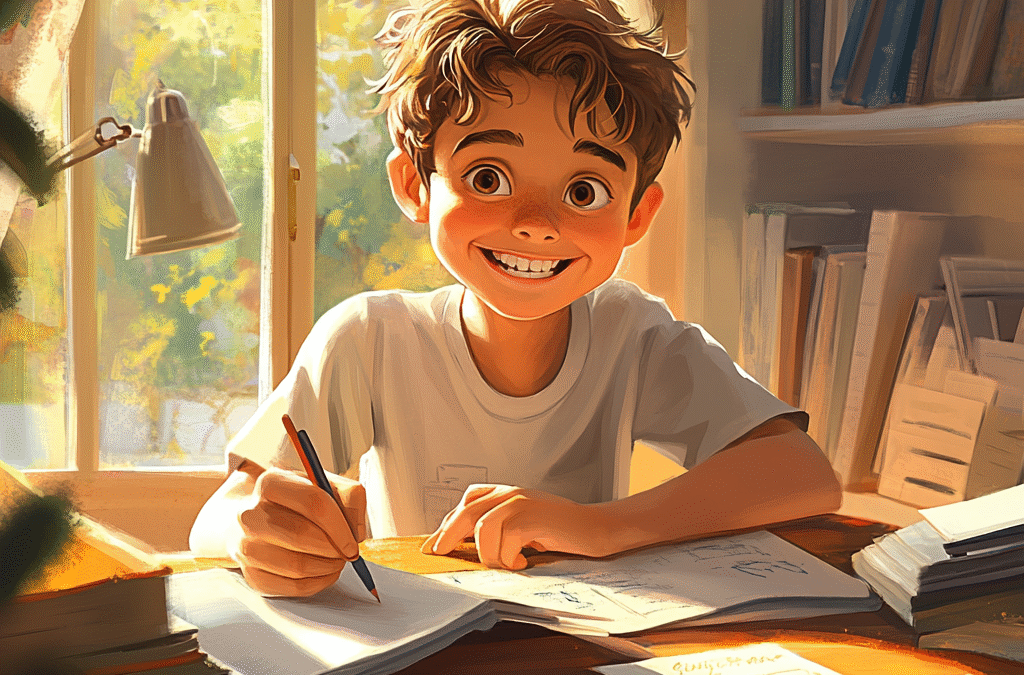
Some children dive into writing with excitement, filling page after page with stories, poems, or doodles. Others freeze at the sight of a blank sheet, worrying their words won’t be “good enough.” The truth is, every child has a story to tell—but sometimes they just need a spark to get started.
Writing shouldn’t feel like a chore or just another school assignment. It can be fun, playful, and personal. Here are a few ways to help children fall in love with writing:
- Let them write what they love
If a child is obsessed with dinosaurs, football, or superheroes, let them write about it. When they write what excites them, the words come more naturally.
- Celebrate effort, not perfection
A story doesn’t have to be neat or polished to be wonderful. Praise their creativity, their ideas, or even just the fact that they gave it a go.
- Make it playful
Try fun prompts like “What would your pet say if it could talk?” or “Write a story about a world made of chocolate.” Silly ideas often unlock the most creative writing.
- Give them an audience
Children light up when someone listens to their story. Let them read it aloud at dinner, share it with a sibling, or even turn it into a mini performance.
- Create the right space
A cosy notebook, colourful pens, or a quiet corner can make writing feel special. It doesn’t have to be fancy—it just has to feel like their own.
And remember—writing doesn’t always have to mean sitting at a desk. It could be jotting ideas on a car journey, recording a voice note, or even drawing a comic strip. The key is to show children that there are many ways to tell a story, and every one of them is valid.
At ESB, we believe writing is more than putting words on a page. It’s about helping children find their voice, express their ideas, and build confidence in themselves. The spark of creativity they discover now can grow into a love that lasts a lifetime.
Every child has a story waiting to be told. Sometimes, all they need is the chance to tell it.
✨ Join us. Let’s spark that love for writing together. ✨
🌟 Free Resource for Parents & Educators
Seeking a gentle approach to support your child’s emotional well-being and learning journey?
We’re offering a free download of Positive Thoughts: Mindfulness Quotes and Daily Affirmations for Inner Peace—a beautiful, calming resource designed to help young learners feel empowered, grounded, and more confident every day.
Perfect for home education, EOTAS, or simply creating mindful family routines.
👉 [Download it here for free]
by Helen Kenworthy | Aug 28, 2025 | Education
Reading doesn’t need to feel like homework. Just a few minutes a day with a book you actually enjoy can open up your imagination, boost your confidence, and change the way you think—without you even realising it.
Here’s why those small moments really matter:
- It doesn’t take long
You don’t need hours or huge books. Ten minutes a day—on the bus, before bed, or during a quiet moment—is enough to make a real difference.
- It grows your imagination
Reading helps your brain build pictures of people, places and adventures. It quietly strengthens your creativity and helps your mind think in new ways.
- It improves your words
The more you read, the easier it becomes to explain what you think and feel. That’s why so many talented writers start off as strong readers.
- It works best when it’s fun
Read what you love—comics, football stories, poems, fantasy, funny books, or even song lyrics. When you enjoy it, you’ll naturally read more.
- It helps you think differently
Reading introduces you to new ideas, cultures, and characters. It stretches your brain and teaches you how to look at the world in clever new ways.
- It builds quiet confidence
Little by little, you’ll find yourself speaking up more, writing better, and feeling braver in conversations—without trying too hard.
- It grows into a lifelong habit
Ten minutes a day might not seem like much, but over time it adds up. Soon, books begin to feel like friends you can take anywhere.
So if you want to boost your imagination, confidence or creativity, start with just ten minutes a day. Choose something fun, keep it regular and watch how this tiny habit can quietly change your life.
🌟 Free Resource for Parents & Educators
Seeking a gentle approach to support your child’s emotional well-being and learning journey?
We’re offering a free download of Positive Thoughts: Mindfulness Quotes and Daily Affirmations for Inner Peace—a beautiful, calming resource designed to help young learners feel empowered, grounded, and more confident every day.
Perfect for home education, EOTAS, or simply creating mindful family routines.
👉 [Download it here for free]
by Helen Kenworthy | Aug 20, 2025 | Education
Sometimes learning feels slow. You study, you practise, you try your best, but the answers still don’t come easily. It can feel like you’re the only one struggling while everyone else is racing ahead.
Here’s a secret: you’re not the only one. Every learner, no matter how clever they seem, has moments when things don’t click right away. The important thing is not to give up when it’s taking longer than you thought.
Learning is a bit like a journey on a twisty road. Sometimes you move quickly, sometimes you have to stop and figure things out, and sometimes you go in circles before finding the right way forward. But every step, even the slow ones, is helping you learn.
Being positive and patient doesn’t mean pretending it’s easy. It means noticing the little wins along the way. Maybe you understood a new word, remembered an answer, or asked a great question. These small steps are signs you’re moving forward.
When you feel stuck, it can help to take a short break, try again later, or ask someone to explain things differently. Sometimes a fresh start or a kind word can make all the difference.
And remember, just because you can’t see the results yet doesn’t mean you’re not growing. Learning is like planting seeds. The roots grow underground before the flowers show. Keep trying, keep believing in yourself, and you’ll see how far you’ve come.
🌟 Free Resource for Parents & Educators
Seeking a gentle approach to support your child’s emotional well-being and learning journey?
We’re offering a free download of Positive Thoughts: Mindfulness Quotes and Daily Affirmations for Inner Peace—a beautiful, calming resource designed to help young learners feel empowered, grounded, and more confident every day.
Perfect for home education, EOTAS, or simply creating mindful family routines.
👉 [Download it here for free]
by Helen Kenworthy | Aug 13, 2025 | Education
Ever tried something, messed it up, and felt like giving up? We’ve all been there. Maybe it was a tricky maths problem, a football match you lost, a poem you couldn’t get quite right, or a big goal that suddenly felt too far away.
Here’s the thing—nobody gets everything right the first time. The people you look up to, the ones who seem “naturally” good at what they do? They’ve failed, made mistakes, and felt frustrated plenty of times. The difference is, they kept going. That’s persistence.
Persistence is like a superpower. It’s what helps you push through when things get tough. It’s the voice in your head that says, “Alright, let’s try again,” even after you’ve fallen flat. And the more you practise it, the stronger it gets.
So how do you stick with something?
• Start small: Break big goals into little steps so you can see progress along the way.
• Remember why you started: Think about what you’ll feel when you finally get there.
• Learn from what didn’t work: Every “mistake” is a clue about how to do better next time.
• Celebrate the small wins: Every step forward counts, no matter how tiny it feels.
Persistence doesn’t mean never feeling tired or fed up. It means choosing to keep moving forward, even when it’s not easy. And every time you do, you’re building skills, confidence, and grit that will help you in school, in hobbies, and in life.
Your ESB challenge:
Think of one thing you’ve been struggling with lately—a piece of homework, a skill you’re learning, a sport, or a creative project. This week, make a promise to yourself not to give up on it. Instead, try again, make one small improvement, and notice how it feels to push through.
You might be surprised at just how much you can achieve when you keep going.
🌟 Free Resource for Parents & Educators
Seeking a gentle approach to support your child’s emotional well-being and learning journey?
We’re offering a free download of Positive Thoughts: Mindfulness Quotes and Daily Affirmations for Inner Peace—a beautiful, calming resource designed to help young learners feel empowered, grounded, and more confident every day.
Perfect for home education, EOTAS, or simply creating mindful family routines.
👉 [Download it here for free]
by Helen Kenworthy | Aug 8, 2025 | Education
Let’s be honest, getting kids into reading can sometimes feel like pulling teeth. But what if it didn’t have to be that hard?
Sometimes, the simplest tweaks (a.k.a. low-hanging fruits) can make a big difference. No fancy routines, no battles, no stress. Just easy, doable things you can start today to help your child enjoy books more.
Here are 5 little wins that go a long way:
- Let them pick the book
Sounds obvious, right? But it works. Kids are way more likely to read when it’s their choice. Comic books, joke books, books about slime or dinosaurs; whatever gets them curious is a win.
- Read aloud—even if they’re older
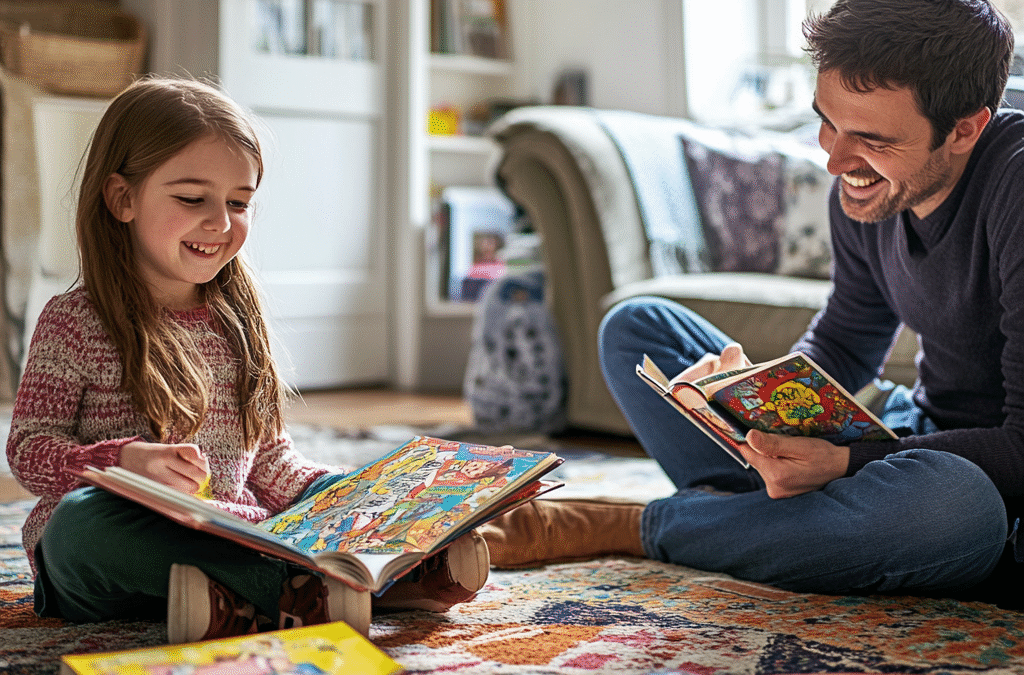
Reading aloud isn’t just for toddlers. A shared story (even for 10- or 12-year-olds) can be relaxing, bonding, and secretly educational. Bonus: you get to do silly voices.
- Leave books lying around
Yup, casually scatter them like snacks. On the coffee table, in the car, by the loo. If a book is within reach, it might just get picked up.
- Use screen time to sneak in reading
Watch a movie based on a book, then ask, “Wanna see what the book’s like?” Or find a Book reviewer your child vibes with. Screens don’t have to be the enemy.
- Celebrate the small stuff
Finished a chapter? Great. Read for 5 minutes? Amazing. Asked what a word meant? Gold star. Reading isn’t a race, cheer on every little step.
🌟 Free Resource for Parents & Educators
Seeking a gentle approach to support your child’s emotional well-being and learning journey?
We’re offering a free download of Positive Thoughts: Mindfulness Quotes and Daily Affirmations for Inner Peace—a beautiful, calming resource designed to help young learners feel empowered, grounded, and more confident every day.
Perfect for home education, EOTAS, or simply creating mindful family routines.
👉 [Download it here for free]