by Helen Kenworthy | Oct 8, 2026 | Brilliantly Underestimated
For lots of young people with dyslexia, the problem isn’t a lack of ideas. Their heads are often full of them. The struggle is getting those thoughts out and onto the page, especially when an exam clock is ticking and a blank sheet is staring back.
Helen Kenworthy has spent decades supporting young people with SEND, is the author of GCSE resource books, and founded The RYTC, which celebrates its 30th anniversary this year. This Dyslexia Week, she shares a session that shows what happens when we stop starting with the worksheet.
Feeling okay comes first.
Helen was working with a GCSE student preparing for exams. This young person has a complex SEND profile and was also dealing with ongoing communication difficulties at home.
In Helen’s experience, exam technique only takes a young person so far. Real progress comes when they feel emotionally safe, because it’s the subconscious, not the worksheet, that drives learning. When the nervous system is on high alert, even writing something simple can feel impossible.
Giving the writing a real purpose
The task was a GCSE English Language transactional writing question. Instead of a dry practice prompt, Helen invited the student to write a “Teenage Manual”: a guide explaining how teenagers think, how they feel, and what they actually need from their parents.
Suddenly the student had something real to say. The exam task became a way to put words to feelings they had been carrying around.
Saying it out loud before writing it down
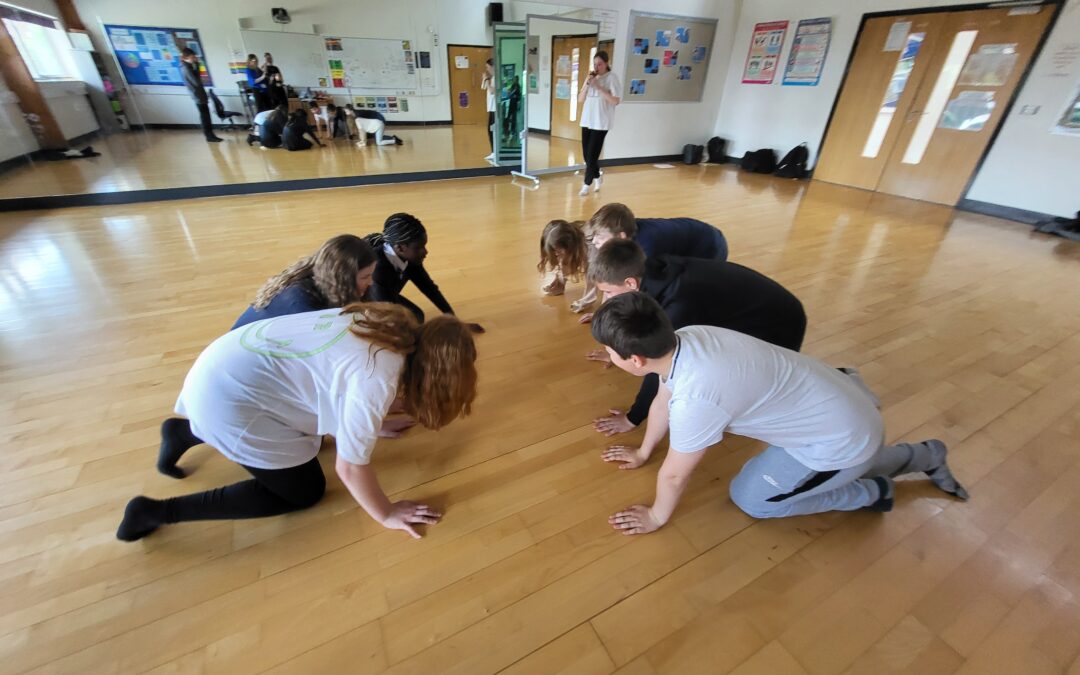
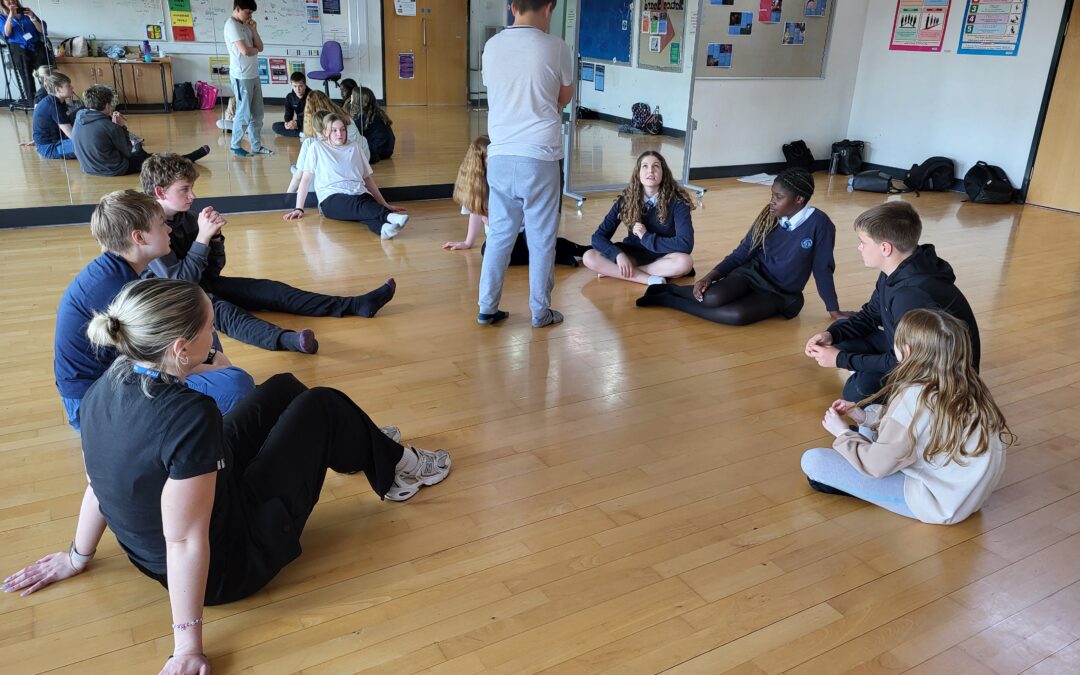
Helen then brought in a technique from the arts called Forum Theatre. Together, they acted out everyday scenarios, paused, and tried different ways of responding. Using a “hive mind” approach, they explored lots of possible reactions and looked at each situation from both sides.
This gave the student a safe space to experiment with language, without any real world fallout. By the time they came to write, the words had already been spoken, tested and shaped.
What changed
The result was a strong exam response, with vocabulary and sentence structure that flowed naturally. Even more importantly, the student left calmer and more hopeful, moving from “I can’t do this” to completely nailing it.
Helen’s advice for parents
- Talk it through first. Let your child say their ideas out loud before writing anything.
- Make it matter. Link writing tasks to something your child genuinely cares about.
- Act it out. A quick role play can unlock words that won’t come on paper.
- Calm before content. If your child is overwhelmed, pause the task and settle first.
How Education Selection Box can help
At Education Selection Box, we support young people with English, maths and other school subjects, including those who are not currently in school. Our one-to-one support, courses and subscription materials blend curriculum knowledge with creativity and SEND expertise, so learning feels possible again.
We’re proud that this child-centred approach was recently recognised with the Diamond Distinction Award 2026 for Specialists in Child-Centred and SEN Learning Programmes, Midlands.
Watch Helen’s video
See the full session and how Forum Theatre turned exam prep into a breakthrough: https://youtu.be/q5iXFh8Wj9s
by Helen Kenworthy | Oct 1, 2026 | Brilliantly Underestimated
It’s National Poetry Day, a day that celebrates the power of words. But for many children, words on a page bring worry rather than joy. If your child finds reading, writing or schoolwork hard, you are not alone, and your child is not failing. They may simply need a different way in.
The problem with one size fits all
Most classrooms are set up to teach lots of children in the same way, at the same speed. That works for some. For others, it leads to stress, falling behind, and believing they are “no good” at learning. Some children end up unable to attend school at all.
The truth is, these children are often brilliantly underestimated. With the right support, they can make real progress.
Every child learns differently
In her latest video, Helen explains why there is no single right way to learn. Some children need to see things laid out clearly. Some need to hear them explained. Some need to get hands on. Some thrive on encouragement and creativity, while others feel safer with clear structure and steps.
🎥 Watch Helen’s video here: https://youtu.be/xoKKpBZCsus
What this looks like in practice
At Education Selection Box, we support children with English, maths, history and other school subjects, including those learning at home or outside mainstream school. We start with the child, not the curriculum. That might mean:
- Breaking tasks into small, manageable steps.
- Using games, stories and real life examples to explain new ideas.
- Mixing reading and writing with talking, drawing and doing.
- Going at a pace that feels safe, not rushed.
- Celebrating every small win to build confidence.
When a child feels calm and capable, learning becomes possible again.
Simple ideas to try at home
- Read together and take turns, rather than asking your child to read alone.
- Let them talk through an answer before writing it down.
- Use everyday moments like cooking or shopping to practise maths.
- Keep sessions short and stop while it’s still going well.
- Notice and praise effort, not just correct answers.
How Education Selection Box can help
We offer subscription learning materials, one to one support and courses, all designed around the individual child. Our work alongside The RYTC was recently recognised with the Diamond Distinction Award 2026 for Specialists in Child-Centered & SEN Learning Programmes, Midlands.
A great place to start is our free confidence boosting book: https://www.educationselectionbox.com/free-download/
by Helen Kenworthy | Sep 17, 2026 | Brilliantly Underestimated
A lot of parents come to us thinking the problem is a maths block, or a reading struggle, or a child who “just won’t focus.” Often, the real issue is underneath that.
When a child’s nervous system is stuck in fight or flight, focus becomes almost impossible. Not because they aren’t capable, but because a heightened nervous system pulls all the body’s resources toward survival, not learning. It shows up as poor sleep, restlessness, and a tendency to react to small things as if they were much bigger problems. None of that is a motivation issue. It’s biology.
Here’s the principle we build every session around: you cannot teach logic and structure to a nervous system that thinks it’s under threat. Calm has to come first. Only once a child feels safe does the academic work actually start to land.
That’s why, before we open a textbook, we check in. We ask how a child is really doing. Sometimes that conversation matters more than the lesson plan.
It’s this approach, regulation before resolution, that sits behind everything we do at Education Selection Box, recognised recently with the Diamond Distinction Award 2026 for Specialists in Child-Centered and SEN Learning Programmes, Midlands 2026. It’s also the thinking I’ll be bringing next month to Class Business Live, held at the Children’s Activity Conference and Awards, where I’ll be hosting a mastermind table on the Founder to CEO shift while sponsoring the Strategic Lead Award.
Hear more on this directly from Helen: https://youtu.be/YV-_243aTuA
Creative Pathway Methodology: Of Course You Can!™ serving the brilliantly underestimated.
by Helen Kenworthy | Sep 10, 2026 | Brilliantly Underestimated
At ESB, we spend our days helping young people who need a different kind of support with their learning. And a story Helen shared this week reminded us why that support matters so much.
Helen stopped in the pouring rain to help a mum, simply asking what she needed and offering a hand. What struck us wasn’t the act itself, it was how surprised the mum was that anyone had stopped at all.
That’s the same thing we see with a lot of the young people we work with. So many of them are brilliantly underestimated, quietly capable, quietly struggling, and often overlooked in a mainstream classroom that couldn’t quite meet their needs. When the right support finally arrives, tailored, patient, genuinely offered, it can be just as surprising and just as powerful as a stranger stopping in the rain.
That’s what ESB is built on. Noticing what young people actually need and offering real, practical help, whether that’s one to one support, subscription resources, or a course built around them.
Watch the full story that inspired this here: https://youtu.be/IUoItHeSLOQ
by Helen Kenworthy | Sep 4, 2026 | Brilliantly Underestimated
Sometimes the Most Productive Thing You Can Do Is Stop
Helen recorded this one from a park bench, mid-autumn, wind in her hair.
She’d just come from a session she’d been really looking forward to. It delivered too, brilliant content, brilliant people, brilliant space. But by the time it wrapped, her brain was full. Not in a bad way. Just full. So instead of pushing on to the next thing, she went outside, sat somewhere green, and let herself have a timeout.
That’s really the whole message, and it’s something we see all the time at Education Selection Box.
Learning takes energy, and for a lot of young people, especially those who’ve struggled in traditional school settings, that energy runs out faster than expected. It’s not a lack of ability. It’s a full brain that needs a moment before it can take in anything more. When you’ve done enough, your body usually tells you. The trick is learning to listen, and recognising that a pause isn’t falling behind.
Being outdoors, surrounded by green, does something good for us as human beings. It’s the same principle behind why we build flexibility into how we support students: short sessions, breathing room, and the freedom to step away when concentration runs out, rather than pushing through and burning out.
Here’s the part worth sitting with: taking that timeout isn’t slacking off. It’s what allows everything just learned, a new maths concept, a tricky bit of English, a whole new way of thinking about history, to actually settle in. Without it, all that new information risks tipping over into overwhelm rather than understanding.
This is at the heart of how we work at ESB. We’re not just here to deliver subject content. We’re here to help students learn in a way that actually sticks, at a pace that respects what their brain and body can handle.
Helen shares this and more like it in her videos, well worth following along.
by Helen Kenworthy | Aug 27, 2026 | Brilliantly Underestimated
A tutoring session does not need a fixed classroom to work. All it needs is a strong connection between tutor and student, and the tools to make each session count. That flexibility opens up something bigger than convenience. It means a learning programme can be shaped entirely around a young person’s real life.
Take a family who travel often. Rather than fighting against that lifestyle, their learning programme works with it. Geography lessons follow the route they are taking. History connects to the places they pass through. Maths becomes practical, working out distances and fuel use instead of abstract sums on a page.
That is the heart of academic support at Education Selection Box. Every young person learns differently, and every family’s circumstances are different too. Whether a child needs help with English, maths, or any school subject, we design support around who they are and how they live, not a one-size-fits-all timetable.
Of course you can keep up with schoolwork, even when life does not look like everyone else’s. We will help you find the way that fits.
Watch the video that inspired this: https://youtu.be/eyD5nXQHPew
Creative Pathway Methodology: Of Course You Can!™ serving the brilliantly underestimated.