by Helen Kenworthy | Nov 19, 2026 | Brilliantly Underestimated
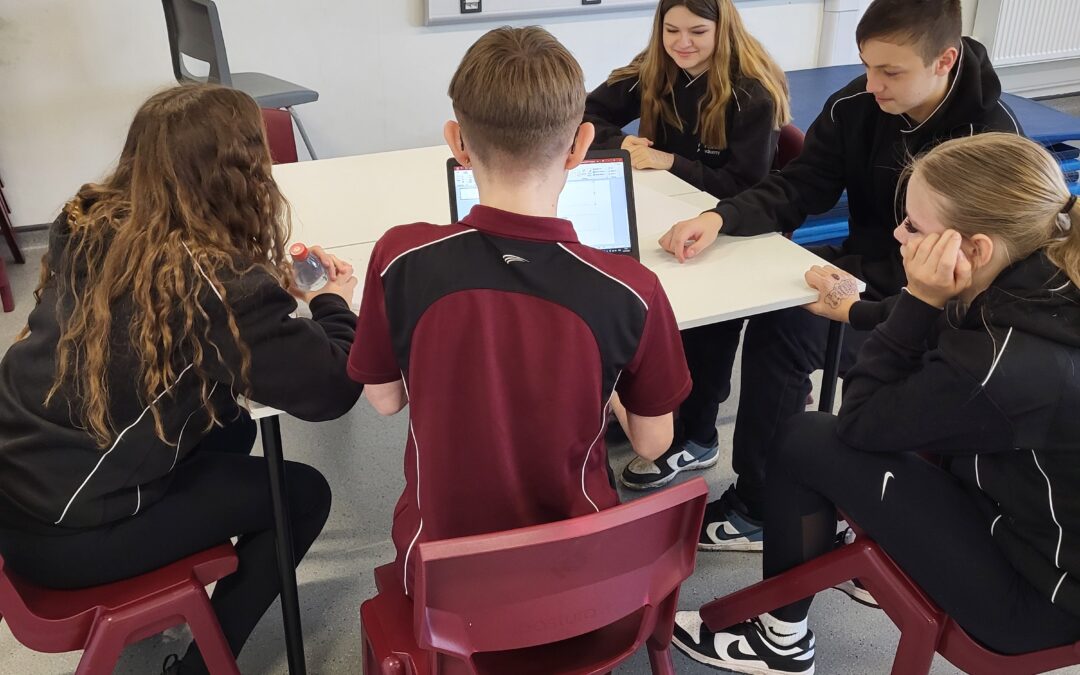
This week is Anti-Bullying Week, and the theme is Break the Silence. When we think of bullying, we often picture the playground. But for many young people, it starts in the classroom.
“Thick.” “Lazy.” “Behind.” “Can’t read.” These are the labels that follow a young person who struggles with learning. They get whispered when someone reads aloud slowly, or laughed about when the sets are announced. And for a young person who already feels unsure of themselves, they hit hard.
The link between learning struggles and bullying
Young people who learn differently, who are neurodivergent, or who have spent time out of school are often more likely to be targeted. The learning label and the bullying label feed each other. The more a young person is teased, the more anxious they become. The more anxious they are, the harder it is to learn. It becomes a cycle.
Replacing labels with pathways
At Education Selection Box, we don’t start with what a young person can’t do. We start with how they learn best. A young person who is “behind” isn’t failing. They simply need a different pace, a different approach, or a calmer space to learn in.
How parents can help break the silence
- Listen for the labels. If your child says “I’m stupid” or “I’m rubbish at maths”, gently ask where that idea came from.
- Separate the struggle from the child. Struggling with fractions is something they’re working on, not who they are.
- Talk to the school. Share what you’re noticing and ask how they’re supporting your child.
- Look for the right fit. Sometimes a young person needs learning that happens at their pace, outside the pressure of the classroom.
How Education Selection Box can help
We provide academic support in English, maths, history and other school-linked subjects, including for young people who can’t be in school. Choose from subscription materials, one-to-one support and courses, or ask us about a bespoke programme.
Find out more and explore every pathway: https://helenkenworthy.com/
Creative Pathway Methodology; Of Course You Can! Serving the Brilliantly Underestimated
by Helen Kenworthy | Jun 3, 2026 | Brilliantly Underestimated
Some children are ready for a challenge. They enjoy being stretched, encouraged and given a little push towards the next step.
But not every child learns best that way.
For some children, too much pressure can make learning feel harder. A blank page can feel enormous. A new task can feel frightening. Joining a group, sharing an idea or starting a piece of writing can feel like too much before they have even begun.
What looks like refusal may actually be fear. What looks like silence may be overwhelm. What looks like “I can’t” may be a child asking for help in the only way they can.
At Education Selection Box (ESB), we understand that learning begins with safety.
Before a child can write, read, focus, create or complete a task, they may first need to feel calm enough to try. They may need the work broken down into smaller steps. They may need reassurance, structure and someone beside them who can say, “I’ll do it with you.”
That simple approach can change so much.
It tells a child they are not expected to know everything straight away. It gives them permission to begin slowly. It helps them move from fear into participation, one step at a time.
This is why the Young Author course is such a powerful part of ESB’s work. It gives young people a safe, creative and encouraging space to write their own story, develop their ideas and work towards becoming a published author.
That is not just an English task.
It is a confidence-building experience.
Through the process of creating their own book, young people practise writing, structure, communication, ideas development and presentation. These are important learning skills, but they are also life skills. They help children learn how to organise their thoughts, express themselves and complete something meaningful.
The most powerful part is that they finish with something real.
Their own book.
A published book becomes proof. Proof that they started. Proof that they followed the steps. Proof that their ideas mattered. Proof that they completed something they may once have thought was too difficult.
And when doubt appears again, that book can remind them: “I have done something brave before. I can try again.”
This sits at the heart of Helen Kenworthy’s Creative Pathway Methodology and the wider Of Course You Can!™ approach. Confidence is not forced. It is built through safe, supported and meaningful experiences.
At ESB, we do not expect every child to arrive ready. We create the structure, encouragement and space that helps them become ready.
Because when learning feels safe, children can begin to believe in themselves.
- They can write.
- They can create.
- They can share their ideas.
They can complete something they are proud of.
And they can begin to believe in what is possible for them.
Find out more about Education Selection Box and its learning support through Helen Kenworthy’s wider Creative Pathway Methodology here: https://helenkenworthy.com/
Watch Helen’s reflection on why some young people need safety, guidance and support before they can take the next step here: https://youtu.be/A–zdSbhA5o
Creative Pathway Methodology: Of Course You Can!™ serving the brilliantly underestimated
by Helen Kenworthy | May 19, 2026 | Brilliantly Underestimated
Education today has to prepare children for more than tests, grades and lesson outcomes. It also has to help them understand the world they are growing up in, the choices they make within it, and how those choices can affect other people.
Helen’s recent reflection begins with a frightening real-life experience on the motorway in heavy rain. The situation itself was about driving, but the deeper message reaches far beyond the road. It reminds us that one person’s decision can change someone else’s sense of safety, calm and control in an instant.
That is an important lesson for children and young people.
At Education Selection Box, we believe learning should help children make sense of real life, not just memorise information. Children need support to understand that actions have consequences. They need space to explore why choices matter, how other people may experience those choices, and what it means to pause before reacting.
This is especially important in education today, where many children are navigating pressure, sensory overwhelm, anxiety, frustration, social challenges and fast-changing environments. Some children may know what they are supposed to do, but still struggle in the moment to regulate, reflect or respond calmly.
That is why education needs to include emotional understanding as well as academic learning.
When a child is taught about consequences only through punishment, they may learn fear, but not necessarily awareness. When they are supported through conversation, reflection and real-life examples, they begin to understand impact. They can start to ask better questions: What happened? How did my choice affect someone else? What could I try next time?
These are powerful learning moments.
Real-life learning helps children connect knowledge with behaviour. A discussion about choices can become a lesson in empathy. A moment of reflection can become a lesson in responsibility. A calm conversation after something has gone wrong can become a lesson in regulation, communication and trust.
This does not mean every lesson has to become serious or heavy. It means education should create room for children to understand themselves and others more clearly. It should help them recognise that their feelings matter, but so do other people’s feelings. Their needs matter, but so does the impact of how they respond.
Helen’s video also reminds us of the importance of regulation. After a frightening experience, the nervous system needs time to settle. Children need to learn this too. They need adults who can model what it looks like to pause, breathe, reflect, and return to calm instead of rushing straight into blame or reaction.
That kind of modelling is education.
It teaches children that difficult moments can be processed. It teaches them that mistakes can be reflected on. It teaches them that awareness can grow.
Education today must help children understand choices and consequences because life will keep asking them to make decisions. In friendships. In classrooms. In families. In communities. Online. In public spaces. Eventually, in workplaces and adult life.
The more we help children understand impact early, the more we support them to become thoughtful, aware and responsible people.
At Education Selection Box, this is part of why flexible, thoughtful and child-centred education matters. Children do not all learn in the same way, and they do not all process the world in the same way. But every child deserves the chance to understand that their choices carry meaning, and that they can learn to make those choices with more care.
Because education is not only about what children know.
It is also about how they learn to think, reflect, respond and understand the people around them.
Watch Helen’s reflection here:
https://youtu.be/5n8vqphiX8I
Creative Pathway Methodology: Of Course You Can!™ serving the brilliantly underestimated
by Helen Kenworthy | Feb 4, 2026 | Brilliantly Underestimated
Education Selection Box provides bespoke learning and academic support for children and young people who need something different from mainstream education. We work with families navigating SEND, alternative provision, EOTAS, and non-traditional pathways, creating learning that fits the child in front of us.
What sets ESB apart is our integrated approach. Learning, creativity, and skill-building are treated as one, so children can build confidence, capability, and progress in ways that actually make sense to them.
This is our why, and who this work is for.
Who the Education Selection Box Is For
Education Selection Box works with families who know that mainstream education isn’t working for their child, even when they’ve been told to “give it time” or “try harder.”
We support parents who can see their child’s potential but are watching confidence drop because the learning environment doesn’t suit how their child learns, processes, or feels safe enough to engage.
These are often children and young people we describe as the brilliantly underestimated—not because they lack ability, but because their strengths are easily missed in fast, rigid, or one-size-fits-all systems.
Many of the families we work with have spent years advocating and explaining, often feeling like their child is being measured against the wrong standard. This is the space we work in daily.
You’ll often hear us use the phrase brilliantly underestimated.
It’s the language that reflects what we see every day in the children and young people we support.
Who We Mean by “Brilliantly Underestimated”
We often describe the children and young people we support as the brilliantly underestimated.
These are learners whose abilities are frequently missed because they don’t thrive in fast, rigid, or one-size-fits-all systems. Many are thoughtful, creative, and capable, but their strengths don’t always show up in traditional settings.
The issue is rarely the child. More often, it’s the way learning is structured around them.
At Education Selection Box, our focus isn’t on fixing children. It’s about changing the approach so learning fits the individual.
You might be wondering what makes Education Selection Box different.
The simple answer is that we start with the child, not the system.
We Start With the Child, Not the System
At Education Selection Box, we don’t begin with targets, timetables, or labels.
We begin with the individual child.
Every child brings their own strengths, sensitivities, interests, and challenges. When these are overlooked, learning can quickly become stressful, and confidence takes a knock. When they’re understood, learning becomes something a child can engage with again.
Our role is to slow things down where needed, remove unnecessary pressure, and shape learning so it fits the child in front of us, rather than expecting the child to adapt to a rigid system.
Learning, Creativity, and Wellbeing Go Together
At Education Selection Box, learning doesn’t sit in isolation from confidence or capability.
Children and young people make stronger progress when learning helps them build skills they can actually use, such as communication, problem-solving, collaboration, and confidence in how they show up. These are skills that support both learning now and opportunities later on.
This is where our work sits within the Creative Pathway methodology. Developed alongside RYTC Creatives and Give Get Go Education, the Creative Pathway brings together academic support, creative practice, and skills development as one joined-up approach.
Rather than separating education, creativity, and training into different stages or services, we support children and young people to develop transferable skills alongside their learning. Creative work builds confidence and communication. Structured learning builds clarity and progression. Training supports readiness for wider opportunities.
That’s why our tutoring and learning support are always bespoke. We design learning around the whole individual, helping children build confidence, capability and progress in ways that make sense for where they are now and where they are heading.
This Is for Families Looking for Something Different
The Education Selection Box is for families who are looking for calm, thoughtful support.
For families who want learning to feel steadier, more human, and more responsive.
For families who want their child to be understood, not managed.
For families who know there is another way, even if they’re still figuring out what that looks like.
We meet children where they are and support them to move forward in ways that make sense for them, building confidence and progress over time.
You don’t need all the answers yet.
We’re here to help you work them out.
If you’d like a gentle place to start, you can download our free resource for families navigating alternative pathways and SEND support.
👉 Download the freebie here:
https://www.educationselectionbox.com/free-download
Creative Pathway Methodology: Of Course You Can!™ serving the brilliantly underestimated
by Helen Kenworthy | Apr 28, 2025 | Education
Every child is unique. Some are loud, some are quiet. Some love to read, while others love to dance. Some take their time to warm up, while others jump right in. And that’s what makes them special.
At ESB, we believe that every child is one-of-a-kind, and that’s exactly how it should be. There’s no “right” way to be a child, and that’s something worth celebrating.
Letting Go of “Should”
As parents, it’s easy to get caught up in what we think our children “should” be doing. We might think, “They should be better at spelling,” or “They should be more outgoing,” or “They should be more like other kids.”
But what if we let go of the concept of “should”? What if we just watched, listened, and loved our kids for who they are right now? After all, our children are on their journey, becoming who they’re meant to be, not anyone else. They need our support, not our pressure to be something they’re not.
How to Show Support
Supporting your child means paying attention to what they enjoy and giving them the space to explore it. If they love drawing, keep paper and pencils within reach. If they ask a lot of questions, take the time to explore the answers together. If they prefer playing alone, that’s perfectly fine too.
It’s not about fixing anything. It’s about seeing them for who they are, and saying, “I see you. I’m with you.”
Little Things That Matter
Sometimes it’s the small things that make the biggest difference. Sitting and listening to their stories—even the long and winding ones. Letting them try things their way—even if it’s a little messy. And telling them, “I love you just as you are,” whenever you can.
One of the most powerful things we can say to a child is, “You don’t have to change for me to love you.”
Let’s Celebrate Them
At the end of the day, our children don’t need to be the best at everything. What they need most is to feel loved, safe, and free to be themselves.
At ESB, we’re here to cheer them on, to remind both children and parents that being different isn’t something that needs to be fixed—it’s something to celebrate!
🌟 Free Resource for Parents & Educators
Seeking a gentle approach to support your child’s emotional well-being and learning journey?
We’re offering a free download of Positive Thoughts: Mindfulness Quotes and Daily Affirmations for Inner Peace—a beautiful, calming resource designed to help young learners feel empowered, grounded, and more confident every day.
Perfect for home education, EOTAS, or simply creating mindful family routines.
👉 [Download it here for free]