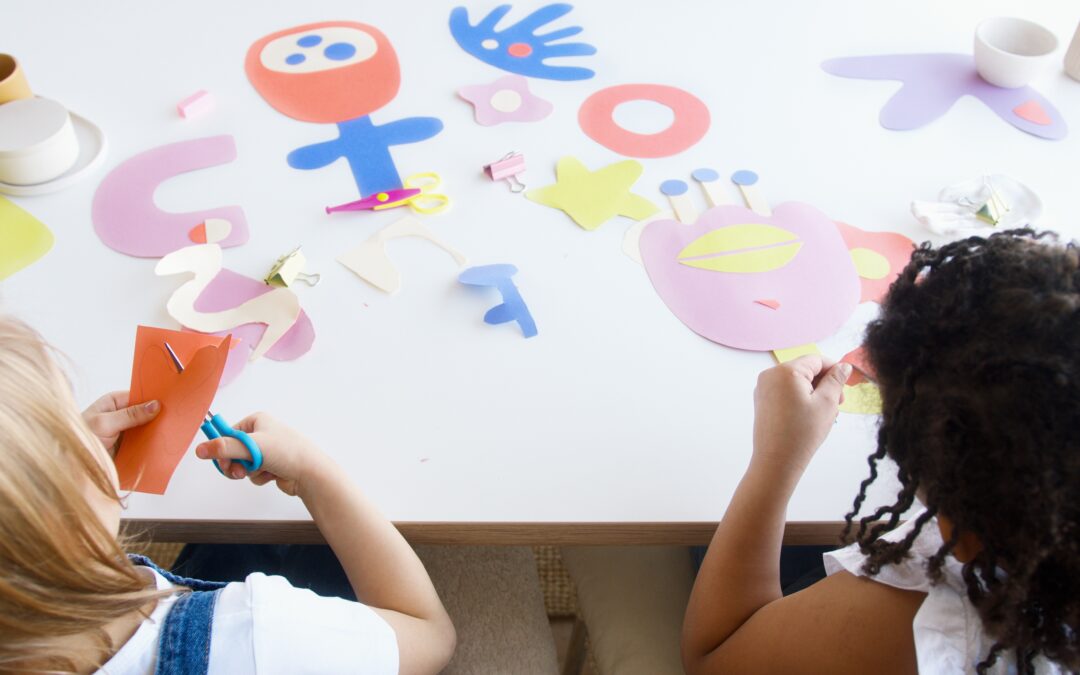
by Helen Kenworthy | Oct 17, 2023 | Education
In a fast-paced and often stressful world, it can be challenging to find effective ways to cope with life’s challenges. Creative therapy, a form of psychotherapy, offers a unique and invaluable approach to healing and personal growth. This therapeutic approach harnesses the power of artistic expression and creativity to help individuals address and overcome emotional, psychological, and even physical issues.
In this blog, we’ll explore the fundamentals of creative therapy and its potential benefits.
Understanding Creative Therapy
Creative therapy, often referred to as expressive therapy, encompasses various techniques that leverage creative activities to foster emotional well-being, self-awareness, and healing. These activities can include art therapy, music therapy, dance/movement therapy, drama therapy, and more. The underlying principle is that the act of creation allows individuals to process and communicate their thoughts and feelings in a non-verbal or non-linear manner.
Key Elements of Creative Therapy
1. Expression
Creative therapy provides a safe and non-judgmental space for individuals to express their emotions. Through artistic mediums, clients can externalize their thoughts and feelings, making them more accessible and manageable.
2. Self-Exploration
Engaging in creative activities helps individuals explore their inner selves, gain insights into their experiences, and identify areas of personal growth. This self-reflection can lead to better self-understanding.
3. Communication
For many, verbal communication is challenging when dealing with emotional issues. Creative therapy offers an alternative means of communicating, which can be especially helpful for those who find it hard to articulate their emotions.
4. Emotional Regulation
The act of creating can be calming and soothing, helping individuals to manage and regulate their emotions. It can provide an emotional outlet and reduce stress and anxiety.
5. Problem-Solving
Creative therapy can encourage individuals to approach problems and conflicts from different angles. The creative process often involves trial and error, which can translate to enhanced problem-solving skills in other aspects of life.
Benefits of Creative Therapy
1. Stress Reduction
Engaging in creative activities can be relaxing and diverting, reducing stress and promoting mental well-being.
2. Enhanced Self-Esteem
As clients create and see their work take shape, it can boost their self-esteem and confidence. The act of producing something meaningful can be empowering.
3. Emotional Healing
Creative therapy has been found to be effective in helping individuals process and heal from trauma, grief, and other emotional wounds.
4. Improved Communication Skills
For those who struggle with verbal communication, creative therapy can enhance their ability to express themselves effectively.
5. Personal Growth
It can contribute to personal growth by encouraging self-reflection, goal setting, and the development of new skills.
Who Can Benefit from Creative Therapy?
Creative therapy is a versatile form of treatment suitable for people of all ages and backgrounds. It has been applied successfully to a wide range of issues, including:
- Children: Creative therapy can help children express their feelings, cope with difficulties, and develop emotionally.
- Teens and Adolescents: It can be particularly useful in addressing issues such as self-esteem, identity, and peer relationships.
- Adults: Creative therapy is valuable for adults dealing with stress, trauma, addiction, or mental health challenges.
- Elderly Individuals: It can assist in improving cognitive function and emotional well-being in the elderly.
Conclusion
Creative therapy offers a refreshing and effective approach to addressing emotional and psychological challenges. Through creative expression, individuals can find solace, healing, and personal growth. The beauty of creative therapy lies in its adaptability, making it a valuable tool for people from all walks of life. If you or someone you know is looking for a non-traditional and empowering way to address emotional issues, consider exploring the world of creative therapy. It might just be the key to unlocking a path toward healing and personal transformation.
🌟 Free Resource for Parents & Educators
Seeking a gentle approach to support your child’s emotional well-being and learning journey?
We’re offering a free download of Positive Thoughts: Mindfulness Quotes and Daily Affirmations for Inner Peace—a beautiful, calming resource designed to help young learners feel empowered, grounded, and more confident every day.
Perfect for home education, EOTAS, or simply creating mindful family routines.
👉 [Download it here for free]
by Helen Kenworthy | Oct 10, 2023 | Education
In today’s educational landscape, one size doesn’t fit all. Every child is unique, with different learning styles, strengths, and areas where they need extra support. At Education Selection Box (ESB), we recognize this diversity and prioritize individualized learning experiences.
In this blog, we’ll explore how ESB’s child-centered learning programs adapt to each child’s learning style and pace, and we’ll share real success stories that highlight the positive impact of personalized education.
Understanding Individualized Learning at ESB
ESB’s child-centered learning approach revolves around tailoring education to meet each student’s specific needs. Here’s how it works:
- Assessment: Before starting, we assess each student’s strengths, weaknesses, and learning style. This initial assessment helps us understand where a child might need extra support or enrichment.
- Personalized Curriculum: Based on the assessment, we create a customized curriculum for each student. This means that children focus on subjects and topics that align with their interests and abilities.
- Flexible Pacing: We recognize that children learn at different rates. Our programs allow students to progress at their own pace, ensuring they fully grasp concepts before moving on.
Creating a supportive and nurturing learning environment that encourages children to explore, experiment, and build confidence in their abilities is essential for their overall development and success. Here are some key steps to achieve this:
1. Establish Clear Expectations and Ground Rules
- Begin by setting clear expectations for behavior and conduct in the learning environment. Make sure children understand the rules and consequences.
- Encourage mutual respect among students, emphasizing kindness, empathy, and inclusivity.
2. Cultivate a Positive and Inclusive Atmosphere
- Create a welcoming and inclusive space where all children feel valued and respected, regardless of their abilities, backgrounds, or interests.
- Foster a culture of positivity and encouragement. Celebrate individual and collective achievements.
3. Create a Safe Physical Environment
- Ensure the learning space is physically safe and free from hazards. Regularly check for potential dangers and address them promptly.
- Provide comfortable seating and ample space for movement and exploration.
4. Offer Choice and Autonomy
- Empower children by giving them choices in their learning. Let them select topics of interest, projects, or activities that align with their passions.
- Encourage autonomy by allowing students to make decisions about their learning journey, with appropriate guidance and support.
5. Provide Access to Resources and Materials
- Make a variety of age-appropriate learning materials, books, art supplies, and technology accessible to children.
- Create well-organized learning centers or stations that encourage independent exploration.
6. Foster Curiosity and Inquiry
- Encourage curiosity by asking open-ended questions and promoting critical thinking. Allow children to ask questions and explore topics that pique their interest.
- Create a culture where it’s okay not to have all the answers, and discovery and learning are ongoing processes.
7. Promote Collaboration and Communication
- Create opportunities for group projects and collaborative learning experiences. Encourage children to share ideas, work together, and communicate effectively.
- Use effective communication techniques that validate children’s feelings and ideas, such as active listening and positive reinforcement.
8. Provide Constructive Feedback and Encouragement
- Offer constructive feedback that focuses on effort, progress, and improvement rather than fixed abilities.
- Praise and acknowledge students’ achievements and efforts regularly, boosting their confidence.
9. Adapt to Individual Learning Styles and Needs
- Recognize that each child is unique. Adapt teaching methods, materials, and approaches to cater to diverse learning styles and abilities.
- Provide additional support or challenges when necessary to help students reach their potential.
10. Celebrate Mistakes and Learning Opportunities
- Encourage a growth mindset by teaching children that mistakes are valuable learning opportunities.
- Emphasize that it’s okay to make errors and that resilience and perseverance are essential qualities.
11. Involve Parents and Caregivers
- Foster a strong partnership with parents and caregivers. Keep them informed about their child’s progress and involve them in the learning process.
- Share strategies and resources with parents to support learning at home.
12. Model a Love for Learning
- Be a role model by demonstrating a genuine passion for learning. Show enthusiasm for exploring new topics and trying new things.
- Share your own experiences of overcoming challenges and setbacks to inspire resilience in children.
Conclusion
ESB’s child-centered learning programs demonstrate the power of individualized education. By recognizing and catering to each child’s unique strengths, challenges, and learning pace, we empower students to thrive academically and build confidence. These success stories are a testament to the transformative impact of personalized education, highlighting how it can make a real difference in a child’s educational journey.
🌟 Free Resource for Parents & Educators
Seeking a gentle approach to support your child’s emotional well-being and learning journey?
We’re offering a free download of Positive Thoughts: Mindfulness Quotes and Daily Affirmations for Inner Peace—a beautiful, calming resource designed to help young learners feel empowered, grounded, and more confident every day.
Perfect for home education, EOTAS, or simply creating mindful family routines.
👉 [Download it here for free]
by Helen Kenworthy | Sep 26, 2023 | Education
Hobbies are a gateway to enriching a child’s life, offering experiences that go beyond the classroom and textbooks. They foster creativity, develop essential skills, and instill a lifelong love for learning.
In this week’s article, we’ll explore ten fantastic hobbies for school-age kids, discussing why they’re important for personal growth and development.
1. Reading for Pleasure
Reading fuels imagination, enhances vocabulary, and improves comprehension skills. It exposes kids to different worlds and cultures, fostering empathy and curiosity. To encourage your child, create a cozy reading nook, provide a variety of books, and let kids choose what interests them.
2. Artistic Expression
Artistic hobbies like drawing, painting, and crafting promote creativity, self-expression, and fine motor skills. They encourage kids to think outside the box. Motivate them by stocking up on art supplies and giving kids the freedom to create. Encourage them to attend art classes or workshops.
3. Musical Pursuits
Learning to play an instrument enhances cognitive abilities, memory, and discipline. It nurtures a deep appreciation for music and provides an outlet for emotions. You can enroll your child in music lessons, whether it’s piano, guitar, violin, or any instrument of their choice.
4. Gardening
Gardening teaches patience, responsibility, and environmental awareness. Kids learn about plant life cycles, ecosystems, and the magic of nurturing living things. Dedicate a small garden patch or use pots for planting. Allow kids to choose plants and engage in watering, weeding, and observing growth.
5. Coding and Robotics
In our digital age, coding and robotics foster problem-solving skills, logical thinking, and creativity. They prepare kids for future careers in technology. Explore coding apps, games, and kits designed for different age groups. Consider coding camps or classes.
6. Sports and Physical Activity
Sports promote physical fitness, teamwork, and discipline. They instill a sense of achievement, boost confidence, and teach kids to set and achieve goals. Always let kids experiment with various sports until they find one they enjoy. Enroll them in sports clubs or teams to cultivate skills and camaraderie.
7. Cooking and Baking
Cooking is a crucial life skill that fosters independence and nutrition awareness. It’s an opportunity to bond with family and explore diverse cuisines. Start with simple recipes and involve kids in meal planning and preparation. Encourage creativity in the kitchen.
8. Science Experiments
Science experiments stimulate curiosity, critical thinking, and problem-solving. They allow kids to explore the wonders of the natural world. Provide safe, age-appropriate science kits or guide kids in simple experiments using household items.
9.Photography
Photography encourages observation skills and artistic expression. It helps kids see the beauty in everyday life and capture memories. Equip your kids with cameras or smartphones and encourage them to document their experiences and surroundings.
10. Astronomy and Stargazing
Astronomy inspires a sense of wonder and curiosity about the universe. It teaches kids about celestial objects, space exploration, and the vastness of the cosmos. You can explore stargazing with telescopes or astronomy apps. Visit planetariums or attend astronomy clubs and events.
Conclusion
Hobbies are not just pastimes; they are pathways to personal growth, skill development, and a deeper understanding of the world. Encourage your school-age child to explore these hobbies, allowing them to discover their passions, nurture their talents, and embark on a journey of lifelong learning and fulfillment.
🌟 Free Resource for Parents & Educators
Seeking a gentle approach to support your child’s emotional well-being and learning journey?
We’re offering a free download of Positive Thoughts: Mindfulness Quotes and Daily Affirmations for Inner Peace—a beautiful, calming resource designed to help young learners feel empowered, grounded, and more confident every day.
Perfect for home education, EOTAS, or simply creating mindful family routines.
👉 [Download it here for free]
by Helen Kenworthy | Sep 19, 2023 | Education
Music, with its enchanting melodies and rhythmic cadences, has long been a universal language of human expression. Its impact extends far beyond mere entertainment; it possesses the power to shape young minds and nurture essential life skills.
In this blog, we will embark on a melodious journey to uncover the myriad benefits of music lessons for children, from cognitive development to emotional well-being.
The Symphony of Cognitive Growth
1. Enhanced Brain Development
Music education stimulates various parts of the brain, enhancing neural connections. Studies have shown that children who receive music lessons tend to have improved memory, attention span, and problem-solving skills.
2. Mathematical Proficiency
Music and math are intertwined in more ways than one might imagine. Learning to read musical notes and rhythms can help children grasp mathematical concepts more easily, fostering a deeper understanding of numbers and patterns.
3. Language Skills
Music introduces children to the nuances of language, helping them with pronunciation, vocabulary, and comprehension. This linguistic boost can lead to improved reading and writing abilities.
4. Creative Expression
Music is a canvas for self-expression. Children can explore their emotions and creativity through composing, playing instruments, or singing, which can boost their artistic and imaginative capabilities.
5. Improved Spatial Intelligence
Learning to read musical scores and recognize patterns in music can enhance a child’s spatial intelligence, which is crucial for subjects like geometry and engineering.
The Harmonious Connection to Emotions
1. Emotional Intelligence
Music has the power to evoke a wide range of emotions. By connecting with music on an emotional level, children can better understand and manage their own feelings, as well as empathize with others.
2. Stress Reduction
Playing or listening to music is a natural stress reliever. Music lessons can provide children with an outlet for releasing stress and anxiety, promoting emotional well-being.
3. Confidence and Self-Esteem
Achieving mastery in music, whether through learning an instrument or mastering a song, can boost a child’s self-confidence and self-esteem. This newfound self-assuredness often carries over into other aspects of life.
4. Patience and Perseverance
Learning an instrument requires patience and perseverance. Children come to understand that mastery takes time and effort, instilling valuable life skills.
The Melodic Bridge to Social Skills
- Collaboration: Many music lessons involve group activities, ensemble playing, or choir participation. These experiences teach children the value of collaboration, teamwork, and coordination with peers.
- Communication: Music is a form of non-verbal communication. Learning to convey emotions and messages through music helps children become better communicators in various social settings.
- Cultural Awareness: Music is a gateway to different cultures and traditions. Exploring music from around the world can broaden a child’s cultural awareness and appreciation.
- Discipline and Responsibility: Regular practice and commitment are essential in music education. Children learn the importance of discipline, time management, and responsibility.
The Overture to a Lifelong Passion
- Lifelong Learning – Music is a pursuit that can be enjoyed throughout one’s life. Children who start early often develop a lifelong passion for music, providing them with a constant source of joy and enrichment.
- Career Opportunities – For some, music becomes not just a hobby but a profession. Music education can open doors to careers in performance, teaching, composition, sound engineering, and more.
The Final Note
In conclusion, the benefits of music lessons for children extend far beyond the melodies and harmonies they create. Music nurtures cognitive development, emotional intelligence, social skills, and a lifelong passion for the arts. It provides children with the tools they need to navigate the intricate symphony of life, fostering a harmonious and enriched future. Encouraging a child’s musical journey may just be the most harmonious gift you can offer.
🌟 Free Resource for Parents & Educators
Seeking a gentle approach to support your child’s emotional well-being and learning journey?
We’re offering a free download of Positive Thoughts: Mindfulness Quotes and Daily Affirmations for Inner Peace—a beautiful, calming resource designed to help young learners feel empowered, grounded, and more confident every day.
Perfect for home education, EOTAS, or simply creating mindful family routines.
👉 [Download it here for free]
by Helen Kenworthy | Sep 12, 2023 | Education
Attention Deficit Hyperactivity Disorder (ADHD) is a neurodevelopmental disorder that affects people of all ages, though it is often first diagnosed in childhood. One of the most significant challenges individuals with ADHD face is in the realm of learning.
Learning with ADHD can be a complex and multifaceted journey, but with the right strategies and support, it is possible to thrive academically and beyond.
In this blog, we will explore the nature of ADHD, its impact on learning, and practical strategies to help individuals with ADHD succeed in educational settings.
Understanding ADHD
ADHD is characterized by difficulties with attention, hyperactivity, and impulsivity. It’s essential to recognize that ADHD is not a choice or a result of laziness. It is a neurobiological condition that affects the brain’s executive functions, such as working memory, organization, and self-regulation. This can make traditional learning environments challenging for individuals with ADHD, but it doesn’t mean they cannot excel with the right support.
Symptoms and Diagnosis
The symptoms are typically classed in two different categories – inattention or hyperactivity/impulsivity. Some can also have a combination of these two traits.
The symptoms of people classed as predominantly inattentive are:
- Distractibility
- Difficulty focusing or listening
- Easily becoming bored
- Daydreaming
- Failing to follow through with instructions
- Difficulty organising
- Often forgetful
Symptoms of those who are classed as predominantly hyperactive/impulsive are:
- Fidgeting
- Failing to stay seated
- Constant talking
- Uncontrollable physical activity
- Difficulty staying quiet
- Impatience
- Interrupting often
Impact on Learning
1. Attention Difficulties
The hallmark symptom of ADHD is difficulty sustaining attention, which can lead to distractibility, forgetfulness, and difficulty following instructions. In a classroom setting, this can result in missed information and reduced academic performance.
2. Hyperactivity and Impulsivity
Hyperactivity and impulsivity can disrupt learning environments, making it challenging for individuals with ADHD to sit still, wait their turn, or think before acting. These symptoms may lead to social challenges and disciplinary issues.
3. Executive Functioning Challenges
Executive functions, such as planning, organization, and time management, are often impaired in individuals with ADHD. These difficulties can hinder the completion of assignments, project planning, and studying effectively.
Effective Strategies for Learning with ADHD
1. Medication
Medication, prescribed and managed by a healthcare professional, can be an essential component of ADHD management. Stimulant and non-stimulant medications can help improve focus and reduce impulsivity.
2. Individualized Education Plans (IEPs) and 504 Plans
IEPs are accommodations that can provide necessary support to students with ADHD. These plans may include extended time on tests, preferential seating, and additional breaks.
3. Structured Routines
Consistent daily routines help individuals with ADHD better manage their time and responsibilities. Establishing a structured schedule for studying, completing assignments, and attending classes can be tremendously helpful.
4. Organizational Tools
Tools like planners, digital calendars, and task lists are invaluable for individuals with ADHD. They can help with keeping track of assignments, deadlines, and responsibilities.
5. Break Tasks into Smaller Steps
Breaking tasks into smaller, more manageable steps can make them less overwhelming. It’s easier to focus on completing one small task at a time than trying to tackle a large project all at once.
6. Utilize Visual Aids
Visual aids, such as color-coded calendars, charts, and mind maps, can help with organizing information and improving memory.
7. Kinesthetic Learning
Incorporating movement into the learning process can be beneficial. Individuals with ADHD often learn better when they can engage their bodies, such as through hands-on activities or using fidget tools.
8. Mindfulness and Relaxation Techniques
Mindfulness exercises and relaxation techniques, like deep breathing, can help manage anxiety and improve focus.
9. Seek Support and Advocacy
It’s essential for individuals with ADHD to seek support from educators, counselors, and healthcare professionals. Advocacy and self-advocacy skills are crucial in ensuring they receive the necessary accommodations and understanding.
Conclusion
Learning with ADHD may present unique challenges, but it’s essential to remember that individuals with ADHD also possess numerous strengths, such as creativity, resilience, and problem-solving skills. By implementing the right strategies and accessing appropriate support, individuals with ADHD can excel academically and thrive in educational settings. Moreover, increased awareness and understanding of
ADHD can help create inclusive learning environments that accommodate the diverse needs of all students, including those with ADHD.
🌟 Free Resource for Parents & Educators
Seeking a gentle approach to support your child’s emotional well-being and learning journey?
We’re offering a free download of Positive Thoughts: Mindfulness Quotes and Daily Affirmations for Inner Peace—a beautiful, calming resource designed to help young learners feel empowered, grounded, and more confident every day.
Perfect for home education, EOTAS, or simply creating mindful family routines.
👉 [Download it here for free]