by Helen Kenworthy | Jun 18, 2026 | Brilliantly Underestimated
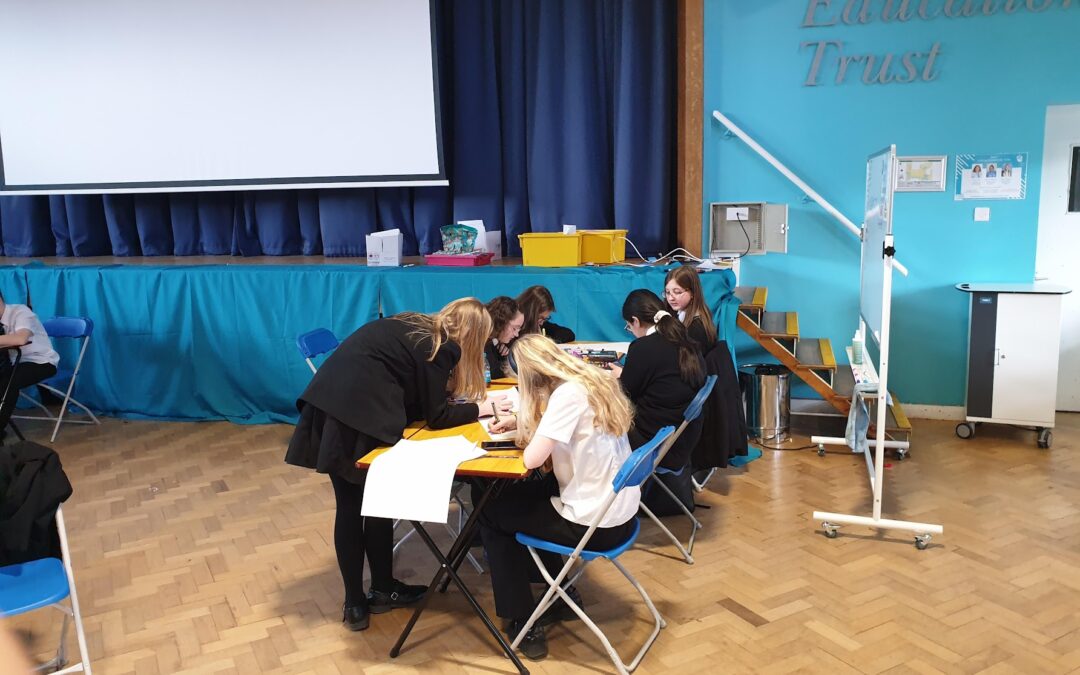
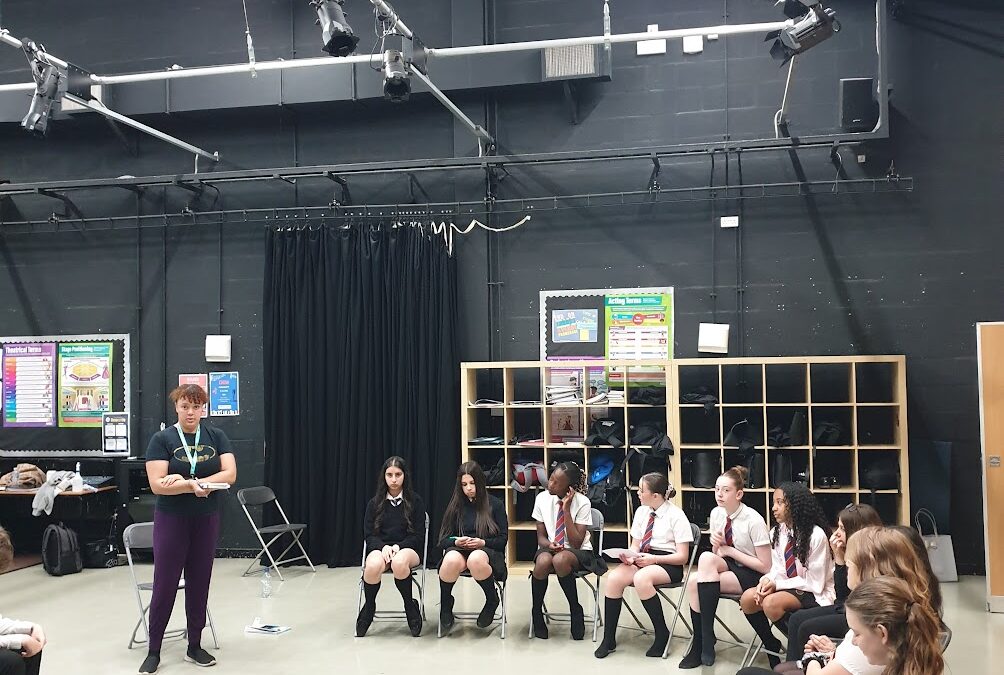
Education Selection Box supports young people with academic learning in a way that feels calmer, clearer and more manageable.
For some students, school subjects can feel stressful. They may find English, maths, history or other areas of learning difficult to access in the usual way. Some may need extra support alongside school. Others may not be able to be in school full-time, or may need a different route back into learning.
Education Selection Box exists to help make learning feel possible again.
The work focuses on academic support, including school subjects, learning resources, one-to-one support, courses and bespoke projects. The aim is not only to help young people understand a subject, but to help them rebuild confidence in themselves as learners.
At the heart of Education Selection Box is the belief: Of Course You Can!™
This means meeting each young person where they are. It means understanding that not everyone learns in the same way, at the same pace or with the same kind of support. Some students need more time. Some need creative explanations. Some need learning broken down into smaller steps. Some need to feel safe before they can begin.
Education Selection Box creates support around the learner, not the other way around.
Families, schools and organisations can access ready-made resources, courses and support packages. Bespoke projects can also be created for schools or groups who need something more specific.
A school may need a tailored project for a group of students. A family may need one-to-one academic support. An organisation may need learning materials that suit the needs of the young people they are working with.
Education Selection Box can help shape that support.
It is also part of a wider partnership with The RYTC and Give Get Go Education. Together, these pathways support young people through academic learning, creative arts and training for future opportunities.
Education Selection Box’s role is simple: to help young people feel more confident, more supported and more able to learn.
Because when learning feels less overwhelming, young people can begin to believe in themselves again.
Creative Pathway Methodology: Of Course You Can!™ serving the brilliantly underestimated.
Find out more about Education Selection Box and the wider Of Course You Can!™ approach:
https://helenkenworthy.com/
by Helen Kenworthy | May 27, 2026 | Brilliantly Underestimated
Learning does not have to be limited to one classroom, one desk, or one fixed way of doing things.
This week, we are focusing on Helen’s reflection about how learning can happen anywhere when it is personal, flexible and connected to real life. She shared the example of finishing a tutoring and coaching session from her car, while the student was learning from a boat. The student’s programme was shaped around their travels, connecting learning to geography, history, maths, distance, fuel and changing locations.
At Education Selection Box (ESB), this speaks directly to the heart of personalised education.
Every child learns differently. Some children need learning broken down into smaller steps. Some need a calmer pace. Some need practical examples. Some need visual support. Some need learning to connect to something they already understand or enjoy.
That is why personalised learning matters.
When education meets the child where they are, learning can feel less overwhelming and more possible. A journey can become a maths lesson. A place can become a history discussion. A question can become a writing prompt. A child’s interest can become the doorway to confidence.
This is what flexible education can do. It helps children see that learning is not only something that happens in books or worksheets. It is something they can notice, use, and understand in the world around them.
For the brilliantly underestimated, this can be especially powerful. Some children do not lack ability. They simply need the right route in. They need support that recognises their strengths, understands their needs and gives them space to believe they can do it.
At ESB, we believe personalised learning can happen anywhere when the approach is thoughtful, flexible and built around the child.
Watch Helen’s reflection here:
https://youtu.be/eyD5nXQHPew
When learning meets a child where they are, it can open doors they may not have believed possible.
by Helen Kenworthy | May 19, 2026 | Brilliantly Underestimated
Education today has to prepare children for more than tests, grades and lesson outcomes. It also has to help them understand the world they are growing up in, the choices they make within it, and how those choices can affect other people.
Helen’s recent reflection begins with a frightening real-life experience on the motorway in heavy rain. The situation itself was about driving, but the deeper message reaches far beyond the road. It reminds us that one person’s decision can change someone else’s sense of safety, calm and control in an instant.
That is an important lesson for children and young people.
At Education Selection Box, we believe learning should help children make sense of real life, not just memorise information. Children need support to understand that actions have consequences. They need space to explore why choices matter, how other people may experience those choices, and what it means to pause before reacting.
This is especially important in education today, where many children are navigating pressure, sensory overwhelm, anxiety, frustration, social challenges and fast-changing environments. Some children may know what they are supposed to do, but still struggle in the moment to regulate, reflect or respond calmly.
That is why education needs to include emotional understanding as well as academic learning.
When a child is taught about consequences only through punishment, they may learn fear, but not necessarily awareness. When they are supported through conversation, reflection and real-life examples, they begin to understand impact. They can start to ask better questions: What happened? How did my choice affect someone else? What could I try next time?
These are powerful learning moments.
Real-life learning helps children connect knowledge with behaviour. A discussion about choices can become a lesson in empathy. A moment of reflection can become a lesson in responsibility. A calm conversation after something has gone wrong can become a lesson in regulation, communication and trust.
This does not mean every lesson has to become serious or heavy. It means education should create room for children to understand themselves and others more clearly. It should help them recognise that their feelings matter, but so do other people’s feelings. Their needs matter, but so does the impact of how they respond.
Helen’s video also reminds us of the importance of regulation. After a frightening experience, the nervous system needs time to settle. Children need to learn this too. They need adults who can model what it looks like to pause, breathe, reflect, and return to calm instead of rushing straight into blame or reaction.
That kind of modelling is education.
It teaches children that difficult moments can be processed. It teaches them that mistakes can be reflected on. It teaches them that awareness can grow.
Education today must help children understand choices and consequences because life will keep asking them to make decisions. In friendships. In classrooms. In families. In communities. Online. In public spaces. Eventually, in workplaces and adult life.
The more we help children understand impact early, the more we support them to become thoughtful, aware and responsible people.
At Education Selection Box, this is part of why flexible, thoughtful and child-centred education matters. Children do not all learn in the same way, and they do not all process the world in the same way. But every child deserves the chance to understand that their choices carry meaning, and that they can learn to make those choices with more care.
Because education is not only about what children know.
It is also about how they learn to think, reflect, respond and understand the people around them.
Watch Helen’s reflection here:
https://youtu.be/5n8vqphiX8I
Creative Pathway Methodology: Of Course You Can!™ serving the brilliantly underestimated
by Helen Kenworthy | May 6, 2026 | Brilliantly Underestimated
Kindness is one of the simplest things we can teach children, but it is also one of the easiest things to overlook.
We often think of kindness as something we tell children to do. Share nicely. Say thank you. Be gentle. Help your friend. Use kind words. These lessons matter, but children do not only learn kindness from what adults say. They learn it from what adults do.
Helen’s recent reflection begins with a very ordinary moment. The rain was pouring, the sky was grey, and people were rushing back to their cars. In the middle of that rainy car park, Helen noticed a lady with a young baby trying to manage everything at once. The umbrella was there, but she could not use it properly while getting her baby safely settled.
So Helen stopped and offered to help.
It was not a big, dramatic moment. It was a simple offer. Could she hold the umbrella? Could she make that moment a little easier? Could she help in the small way that was needed right there and then?
The lady was grateful. More than that, she seemed genuinely touched that someone had noticed her and stopped.
That moment matters because kindness is not only taught in classrooms, assemblies, books, or posters. Kindness is taught in car parks, shops, playgrounds, school gates, and everyday conversations. Children are always watching how adults respond to the world around them. They notice whether kindness is something we only talk about or something we actually practise when real life gives us the chance.
For the Education Selection Box, this matters deeply because education is not only about academic progress. Children also need to learn to notice when someone may need support, respond with empathy, and understand that their actions can affect someone else’s day.
These are not small life skills. They are part of growing into thoughtful, confident, and emotionally aware people.
This is especially important for children who are brilliantly underestimated. Some children move through the world feeling misunderstood, rushed, corrected, or overlooked. They may need more time, more patience, more reassurance, or a different kind of support.
For them, kindness is not just about being nice. It can be the thing that helps them feel safe enough to learn.
A child who feels seen is more likely to engage. A child who feels supported is more likely to try. A child who experiences patience is more likely to build confidence.
Helen’s rainy car park moment reminds us that kindness does not have to be complicated. We do not need perfect words or a big plan. We simply need to look around and ask, “What could make this moment easier for someone else?”
That is a powerful question for adults, parents, carers and educators.
When children grow up seeing kindness practised around them, they are more likely to carry it forward. They begin to understand that even a small action can bring comfort, confidence or relief to another person.
So perhaps the challenge is simple. Let children see kindness in action. Let them see adults pause, notice and help. Let them see that care is not weakness, and that being thoughtful is a strength.
Because one small act of kindness may last longer than we realise.
It may change someone’s day.
It may shape what a child believes about people.
And it may teach them that they too can be the person who notices, cares and makes a difference.
Watch Helen’s full reflection here:
https://youtu.be/IUoItHeSLOQ
Creative Pathway Methodology: Of Course You Can!™ serving the brilliantly underestimated
by Helen Kenworthy | Apr 23, 2026 | Brilliantly Underestimated
Ever been tired, but still not properly rested?
You go to bed, you stop for the day, but your body hasn’t quite switched off, and you wake up feeling like you never fully settled in the first place.
This is something we see more often than people realise, especially when we look a little more closely at how young people are actually experiencing their day to day learning.
At Education Selection Box, we spend a lot of time thinking about what sits underneath learning, not just what is visible on the surface. Nervous system awareness is a big part of that, because it helps us understand what the body is doing in the background, often without the young person even realising it.
Over time, the body can get used to staying slightly switched on. Whether it is pressure, busy environments, or simply always needing to keep up, the system adapts, and that sense of being “on” can become normal.
That is where sleep becomes important in a very real and practical way.
It is not just about going to bed at a certain time but about whether the body is actually able to relax enough to reset. When that does not happen, the impact shows up the next day in ways that are often misunderstood.
A young person might seem distracted, unsettled, or like they are not focusing, but often their system has not had the chance to properly rest. What looks like a lack of focus can actually be a lack of reset.
When sleep improves, the difference is noticeable. There is more steadiness, more clarity, and a greater ability to engage without everything feeling like an effort. Learning becomes more accessible, not because anything has changed in ability, but because the body is in a better place to support it.
Alongside that, mindset shifts as well. When a young person feels more rested and settled, they approach learning with more patience and more confidence, and things begin to feel more manageable rather than overwhelming.
At Education Selection Box, this is why we look beyond behaviour and focus on understanding the individual. Because when we take into account how a young person is actually feeling and functioning, we are able to support them in a way that makes sense and genuinely helps.
And sometimes, it starts with something simple. Just noticing.
🎥 Watch the full reflection: https://youtu.be/7kEmWVD7-3Y
If this resonates, you can contact Helen here:
https://koalendar.com/e/initial-enquiry
#EducationSelectionBox #NervousSystemAwareness #BetterSleep #MentalWellbeing #SENDSupport #LearningSupport #BrilliantlyUnderestimated